v1.5.0 feature
A home on the internet
Replicato finally has a home on the web. We also put together a short demo video to show how the whole flow works from start to finish. If you’re new here, it’s the fastest way to see what the tool can do.
Updates
New features and improvements that make Replicato better for you.
Replicato finally has a home on the web. We also put together a short demo video to show how the whole flow works from start to finish. If you’re new here, it’s the fastest way to see what the tool can do.
Sometimes you just want to fill existing documents. We hear you.
The new Fill tab allows just that. Upload your data, get your documents. You can also set custom naming rules for the output files based on the data inside them. No more manually renaming download.pdf fifty times, wohoo!
We were wondering how long it would take for our server to hit its limit. Turns out, not that long.
As more and more people started using Replicato, we realized our initial server setup was a bit too weak. We’ve bumped the RAM and tweaked the config so the app stays snappy even when many people run large batch jobs at once.
It’s easy to forget exactly what’s inside a column when you’re looking at a huge spreadsheet. “Column_A” isn’t exactly descriptive.
We’ve added a data preview toggle to the form editor. Now you can see the actual values from your CSV while you’re mapping fields, making it much easier to ensure everything is going where it should.
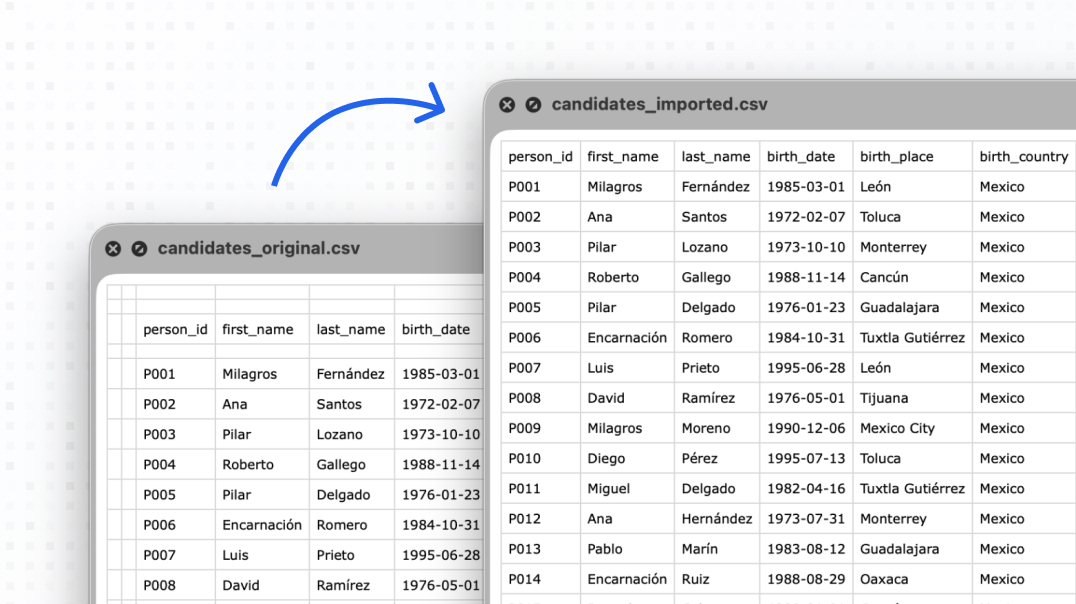
CSV files are rarely perfect. Between empty columns, weird encodings, and data that somehow ended up in the wrong row, they can be a headache to process.
Replicato used to trip up on messy files, but we’ve toughened up the parser. It now handles imperfect data much more gracefully, so you don’t have to spend your afternoon cleaning spreadsheets before uploading them.
The first version of Replicato is officially live.
We started with the backend to see if we could actually pull off automated PDF analysis and batch filling. It works. You can now upload a PDF and a CSV, map the fields, and generate filled documents in one go.
It’s basic, but the core engine is there.